






 Platform
Oct 5, 2026 • 11 min read
What Is Vampire Energy, and How Does It Affect Your Electricity Bill?
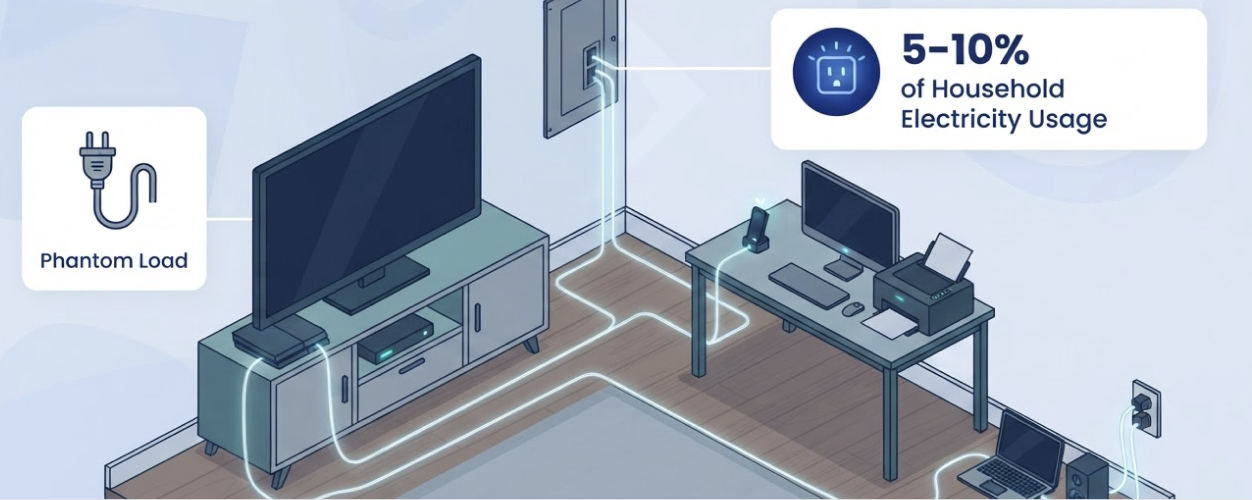
Vampire energy is the electricity that electronic devices consume when they are switched off, in standby mode, or plugged in but not actively being used. Although the amount of electricity used by one inactive device may be small, the combined effect of numerous devices operating around the clock can increase a household’s energy use and electricity costs.
Televisions, cable boxes, microwaves, computers, chargers, gaming systems, and other everyday electronics may continue drawing electricity even when they appear to be off. Understanding where this energy use occurs can help you eliminate unnecessary electricity consumption and gain greater control over your household energy bills.
What Is Vampire Energy?
Vampire energy, also known as vampire loads, refers to the electricity consumed by an electronic device when it is not actively being used.
A device may use vampire energy when it is:
- Switched off but still connected to an outlet
- In standby or sleep mode
- Waiting to receive a signal from a remote control
- Displaying a clock, light, or other information
- Plugged in without performing its primary function
- Fully charged but still connected to a charger
This energy use often goes unnoticed because the device is not visibly operating. However, being turned off does not always mean that an electronic device has stopped consuming electricity.
Some inactive devices continue drawing power so they can maintain settings, display information, or become active quickly when needed. Other devices use electricity simply because they remain physically connected to a power source. For example, a television or cable box may display a small light after it has been turned off, showing that it remains ready to receive a signal. Or a charger left connected to an outlet may continue drawing a small amount of power even when no device is attached.
Are Plug Loads and Vampire Energy the Same Thing?
Plug loads and vampire loads are related, but they are not the same. Plug loads refer to all the electricity consumed by devices plugged into standard wall outlets. Vampire loads are the portion of that electricity used while the devices are off, inactive, or in standby mode.
For example, a television uses plug-load energy while you are watching it. After you turn it off, it may continue using vampire energy to power a standby light or remain ready to receive a signal from the remote control. Therefore, vampire energy is a type of plug-load energy, but not all plug-load energy is vampire energy.
Why Does Vampire Energy Matter?
Vampire loads operate continuously. A device that draws a small amount of standby electricity can continue doing so for hours, days, or months when it is left plugged in. When that energy use is multiplied across televisions, chargers, kitchen appliances, computers, speakers, gaming systems, and other electronics, the total can become significant.
Experts estimate that vampire loads account for approximately 10% of the average US home’s energy use. Plug loads account for about 17% of the average US home's energy use, so that means that less than half of that energy is being consumed when we are actually using our devices.
Once you identify unnecessary vampire loads, you can often reduce them through relatively simple changes.
How Do Vampire Loads Affect Your Electricity Bill?
Vampire energy contributes to the broader cost of plug loads in the home.
Plug loads accounted for about 17% of the average US home’s annual energy costs in 2020. That represented approximately $335 per year in household energy expenses. By the end of 2025, the estimated annual cost of plug loads was closer to $440.
Not all of that cost comes from vampire energy because plug loads also include the electricity devices consume while actively operating. However, vampire loads are estimated to account for approximately 10% of the average home’s overall energy use.
The exact financial impact will vary between households. Even when two homes own similar electronics, their vampire-energy costs may differ based on the number of devices, how those devices are used, their efficiency, local electricity rates, and household habits.
Number of plugged-in devices
The more devices you have connected to outlets, the more opportunities there are for standby energy use.
Many households accumulate electronics over time without removing older or unused devices. A new television, charger, speaker, or appliance may be added while the previous item remains plugged in elsewhere.
Individually, these devices may not appear to use much electricity. Together, they can create a larger and more persistent energy load.
Time spent in standby mode
Devices that remain in standby mode for long periods have more time to consume vampire energy.
An electronic device may only be actively used for a few hours each day but remain connected to electricity for the entire 24-hour period. When electronics are rarely turned off completely or disconnected, their standby energy use can continue between every period of active use.
Device efficiency
Some electronic devices use more electricity than others during both active operation and standby mode. Newer devices are often designed to consume less energy, while older or less-efficient electronics may draw more power than expected.
However, even an efficient device can consume unnecessary electricity if it remains connected when it is no longer needed.
Electricity rates
The cost of vampire energy also depends on the price of electricity. Two homes could use the same amount of standby electricity but pay different amounts based on their local rates.
This means that eliminating unnecessary vampire loads may produce different financial savings in different households, even when the same actions are taken.
Household habits
Daily behavior has a direct effect on vampire-energy costs. Leaving chargers connected, allowing devices to remain in standby mode, and keeping rarely used appliances plugged in all increase the amount of time that electronics can draw electricity.
One forgotten charger or standby light may make only a small difference. When these habits are repeated across many devices every day, however, they can contribute to higher annual energy costs.
Which Devices May Use Vampire Energy?
Vampire loads can come from both large electronics and small household devices.
Common examples include:
- Televisions that display a standby light
- Cable boxes that remain connected when the television is off
- Computers left in sleep or standby mode
- Gaming systems that are not fully powered down
- Microwaves that continuously display the time
- Coffee makers and other small appliances left plugged in
- Speakers and entertainment equipment in standby mode
- Phone and device chargers left in wall outlets
- Fully charged devices that remain connected to chargers
- Electronics that can be activated by a remote control
Some vampire loads are easy to recognize. If a device displays a light, clock, or other information while it is not being used, it is receiving electricity.
Other vampire loads may not produce a visible sign. A charger can continue drawing power even when no phone or other device is attached.
How Can You Tell if a Device Is Using Vampire Energy?
A device may be using vampire energy if it remains connected to an outlet and provides any function while inactive.
Ask the following questions:
- Does the device display a light or clock when it is off?
- Does it enter standby or sleep mode instead of shutting down completely?
- Can it be activated with a remote control?
- Does it remain ready to operate immediately?
- Is its charger warm or connected when no device is attached?
- Does the device remain plugged in even though it is rarely used?
- Is a fully charged device still connected to the wall?
These signs can help you identify where standby electricity use may be occurring.
The most direct way to determine whether a device has stopped drawing power is to disconnect it from its energy source. Unplugging the device or switching off the power strip connected to it eliminates its vampire load.
How to Reduce Vampire Energy in Your Home
Reducing vampire energy does not require eliminating the devices you use. The goal is to prevent electronics from consuming electricity when they are not providing value.
Unplug devices when they are not in use
Unplugging a device physically disconnects it from the power source and completely eliminates its vampire load.
This is especially useful for:
- Chargers
- Small kitchen appliances
- Electronics used only occasionally
- Speakers
- Entertainment equipment
- Devices that do not need to remain continuously connected
If unplugging every electronic device after each use feels difficult, begin with items you do not use daily. A device used once a week does not need to remain connected for the rest of the week.
Remove unused electronics
Reducing the total number of plugged-in devices is one of the most effective ways to reduce vampire energy.
Look for old chargers, outdated electronics, secondary televisions, extra speakers, unused appliances, and other devices that have remained connected despite no longer being part of your routine.
Removing these devices lowers standby electricity use and reduces the number of items you need to manage.
Turn off electronics completely
Turning off a device when it is no longer needed can reduce its active energy use. However, some power buttons place electronics into standby mode rather than shutting them down completely.
If a device continues displaying a light, responds to a remote control, or maintains another standby function after it has been turned off, it may still be drawing electricity. Unplugging it or switching off its power strip may be necessary to eliminate that energy use.
Use a standard power strip
A standard power strip makes it easier to disconnect several electronics simultaneously. Flipping one switch cuts power to every device connected to the controlled outlets.
Power strips are particularly helpful in areas where electronics are grouped together, such as:
- Entertainment centers
- Home offices
- Desktop computer stations
- Desks
- Charging areas
Instead of unplugging each device separately, you can shut off the entire group with one action of turning off the power strip.
Use a smart power strip
Smart power strips can automatically disconnect inactive devices. Different types can turn electronics off based on:
- A preset schedule
- Activity or motion in the room
- A remote control, wall switch, or phone application
- Whether a primary device, such as a television or computer, is operating
- Manually controlled and always-on outlet groups
Automating this process can reduce vampire energy without requiring you to remember to unplug every device each day.
Unplug devices after charging
Fully charged electronics may continue cycling small amounts of power to maintain their charge. Although modern devices are generally designed to prevent overcharging, leaving them connected can still contribute to unnecessary energy use.
Unplugging a device once charging is complete reduces this trickle charging and can also support long-term battery health.
Frequently Asked Questions About Vampire Energy
What is vampire energy in simple terms?
Vampire energy is the electricity a device uses when it is turned off, in standby mode, or plugged in without being actively used.
Is vampire energy the same as standby power?
Standby energy use is one form of vampire energy. Vampire energy can also include electricity consumed by chargers and other devices that remain plugged in without actively performing their main function.
Do electronics use electricity when they are turned off?
Some electronics do. They may continue using electricity to display information, maintain settings, receive remote-control signals, or remain ready to operate.
Does unplugging electronics save energy?
Unplugging an electronic device stops it from drawing electricity and eliminates its vampire load. The total effect depends on the device and how long it would otherwise remain connected.
Do chargers use electricity when nothing is connected?
Chargers left plugged into an outlet can continue drawing power even when they are not connected to a phone or other device.
What is the easiest way to reduce vampire energy?
Start by unplugging chargers, rarely used electronics, and small appliances when not in use. Use power strips for groups of devices that are inconvenient to unplug individually.
Can a power strip stop vampire energy?
Yes. Turning off a power strip cuts electricity to the devices connected to its controlled outlets. Smart power strips can also perform this action automatically based on schedules, activity, or device use.
Key Takeaways
Vampire energy is the electricity consumed by devices when they are switched off, in standby mode, or plugged in but not actively being used. It is a type of plug load and can come from televisions, computers, gaming systems, kitchen appliances, chargers, and many other household electronics.
Although the electricity used by one inactive device may be small, vampire loads operate continuously and can accumulate across dozens of devices. They are estimated to account for approximately 10% of the average US home’s energy use.
The most effective ways to reduce vampire energy are to:
- Unplug devices when they are not needed
- Remove unused electronics
- Turn devices off completely
- Disconnect chargers after use
- Use standard power strips to control groups of electronics
- Use smart power strips to automate when devices receive power
Becoming more aware of what remains plugged in, and whether those devices need continuous power, can help you reduce unnecessary electricity use and take greater control over your electricity bill.
For a broader explanation of active plug loads, vampire energy, power strips, battery health, and household electricity costs, read our Complete Guide to Plug Loads.
Turn What You Learned Into Action
Continue exploring more ways to lower your utility costs and live more sustainably by signing up for CSA for Individuals.
Want your employer to offer the Carbon Savings Account as an employee benefit? HR and sustainability leaders can request a demo, and employees can use these email templates to introduce the CSA to their HR team.
Join our community
Sign up for our newsletter to stay up-to-date on all things Scope Zero.


Subscribe to our newsletter



Solutions