






 Platform
Aug 31, 2026 • 14 min read
The Complete Guide to Plug Loads
Electronic devices are used in nearly every room in a typical home. Televisions, computers, phone chargers, routers, coffee makers, microwaves, gaming systems, and other plugged-in devices all consume electricity. Some use energy only while operating, while others continue drawing power when they appear to be turned off.
The electricity used by these devices is known as plug-load energy. The electricity they consume while switched off, in standby mode, or not actively being used is known as vampire energy.
Understanding plug loads and vampire loads can help you identify unnecessary electricity consumption, lower your electricity bills, and become more intentional about how you use technology. This complete guide explains what plug loads and vampire loads are, what determines their cost, and how actions such as unplugging devices, using power strips, and maintaining rechargeable batteries can reduce household energy use.
Table of Contents
What Are Plug Loads?
Plug loads refer to the electricity used by devices connected to standard wall outlets. They include large electronics, small appliances, chargers, and other everyday devices.
Most residences contain a large number of plugged-in devices spread across multiple rooms. Some are used every day, while others may remain plugged in even though they are rarely needed.
Altogether these devices can represent a significant and easily overlooked portion of household electricity use.
What Are Vampire Loads?
Vampire loads, also called vampire energy, standby energy, or phantom loads, refer to the electricity devices continue to consume when they are not actively being used.
Some vampire loads are easy to see. A television or cable box may display a small light after it has been turned off, showing that it remains ready to receive a signal. A microwave continues using electricity to display the time even when it is not heating food.
Other vampire loads are less visible. A charger left connected to an outlet may continue drawing a small amount of power even when no device is attached. Electronics can also consume electricity while waiting for commands, maintaining settings, or remaining in standby mode without providing an obvious sign that they are using energy.
When several devices remain plugged in around the clock, that constant energy use can accumulate over time.
Common signs that a device may be using vampire energy
A device may still be drawing electricity if it:
- Displays a light while not in active use
- Remains in standby or sleep mode
- Can be activated with a remote control
- Stays connected to the wall after it has finished charging
- Uses a charger that remains plugged in without a device attached
- Is turned off but has not been disconnected from its power source
Turning a device off does not always stop its electricity consumption completely. Physically unplugging it is the most direct way to eliminate its vampire load. Alternatively, if the device is plugged into a power strip, turning the power strip off eliminates its vampire load.
To learn more about standby power, the devices that commonly consume it, and its effect on household electricity costs, read our guide to Vampire Energy.
How Much Do Plug Loads Cost?
Figure 1 shows that plug loads accounted for about 17% of the average US home’s annual energy costs in 2020. That amounted to approximately $335 per year. Adjusting to average electricity prices in 2025, the estimated annual cost of plug loads is likely closer to $440.
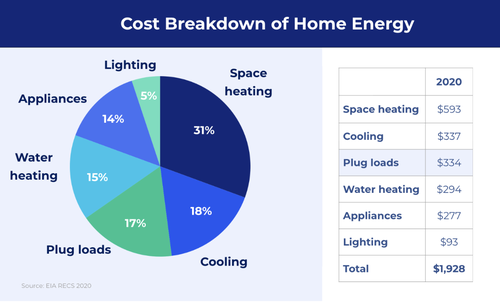
Vampire loads alone are estimated to account for about 10% of the average US home’s energy use. That means of the 17% of energy consumed for all plug loads, less than half of that energy is being consumed when we are actually using our devices. These figures demonstrate that a significant portion of plug-load energy can be consumed when household devices are not actively being used.
What Determines Your Home’s Plug-Load Energy Use?
Understanding the factors behind plug loads can help you determine which changes are most likely to reduce your electricity use.
The number of devices in your home
Homes with more televisions, computers, gaming systems, appliances, speakers, chargers, and connected devices generally have higher plug loads.
Electronics also tend to accumulate. A household may purchase a new device without removing or unplugging the older one. Over time, unused chargers, secondary televisions, older speakers, and other unnecessary electronics can continue contributing to active or standby electricity use.
Taking an inventory of plugged-in devices can make this hidden energy use easier to recognize.
How often and how long devices are used
A device that operates for several hours every day will generally consume more electricity than one used occasionally. Devices left running after they are no longer needed also increase energy use without providing an additional benefit.
Device efficiency
The efficiency of each device affects how much electricity it consumes during operation and while in standby mode. Newer electronics are often designed to use less energy, while older or less-efficient devices may draw more electricity than expected.
However, purchasing a new, more efficient device is not the only way to address plug loads. Reducing the number of devices you own, limiting unnecessary use, and disconnecting electronics when they are not needed can also reduce consumption.
Daily habits
Everyday behavior can significantly affect plug-load and vampire-load costs. Common habits that increase energy consumption include:
- Leaving devices switched on when no one is using them
- Keeping electronics in standby mode
- Leaving chargers connected after charging is complete
- Keeping rarely-used appliances plugged in
- Plugging in devices automatically, even when they do not need to be charged
- Failing to switch off power strips connected to inactive electronics
One instance may make only a small difference, but repeated behaviors can contribute to higher electricity use over time.
How to Reduce Plug Loads and Vampire Energy
Reducing plug-load energy use does not require eliminating electronics or making major lifestyle changes. The most practical approach is to identify which devices provide value, remove unnecessary plug loads, and prevent electronics from consuming energy when they are not needed.
Reduce the number of plugged-in devices
The most effective way to reduce plug loads is to reduce the number of electronic devices you own.
Start by identifying electronics that are rarely or never used. These may include:
- Old chargers
- Unused small appliances
- Secondary televisions
- Extra speakers
- Outdated electronics
- Devices that have been replaced but remain connected
Unplugging or removing these items reduces both active electricity use and vampire energy. It also decreases the number of devices you need to monitor.
Unplug devices when they are not needed
Unplugging a device physically disconnects it from the electricity source and eliminates its vampire load.
This approach is especially useful for chargers, small kitchen appliances, entertainment equipment, and other electronics used intermittently. Devices that do not need to remain continuously connected are often the easiest place to begin to eliminate vampire loads.
If unplugging every device after every use feels unrealistic, focus first on items that are not used daily. A device that is needed once a week can be unplugged to prevent consuming standby electricity throughout the rest of the week.
Turn off devices completely
Turning off electronics when they are no longer needed can reduce their active energy use. However, a standard power button may place some devices into standby mode rather than disconnecting them completely.
When a device continues displaying a light or clock, responds to a remote control, or maintains another standby function, unplugging it or switching off its power strip may be necessary to stop its electricity use fully.
Use standard power strips
A standard power strip allows you to disconnect several devices by flipping one switch. This can make energy management easier when multiple electronics are used in the same area.
Power strips are particularly useful for:
- Entertainment systems
- Home-office equipment
- Desktop computer setups
- Desk areas
- Groups of chargers
Instead of unplugging each item separately, you can cut power to the entire group when it is no longer needed. This reduces vampire energy and makes the habit easier to maintain.
How Smart Power Strips Reduce Vampire Energy
Advanced power strips can automatically cut electricity to devices that are inactive. Although they share the same basic purpose, different types of advanced power strips determine when to switch outlets on and off in different ways.
Choosing the right type of advanced power strip depends on where the devices are located, whether they follow a predictable schedule, and whether one central device controls the rest of the setup.
Timer power strips
A timer power strip turns connected devices on and off according to a preset schedule.
This type works well when device use follows a predictable routine. For example, it can shut down office equipment after work hours or disconnect an entertainment system overnight.
A timer reduces the need to remember to switch devices off manually every day.
Activity-monitor power strips
An activity-monitor power strip uses motion sensors to determine whether someone is present. If it detects no activity for a set period, it automatically turns off connected devices.
This can be useful in home offices, living rooms, and bedrooms where electronics may remain on or in standby mode after a person leaves. The power strip responds to whether the room is being used instead of relying entirely on a manual habit.
Remote-switch power strips
A remote-switch power strip lets you control several electronics using a handheld remote, wall-mounted switch, or phone application.
This option can make it easier to disconnect devices located behind furniture, desks, or entertainment centers. Rather than reaching each outlet or plug, you can shut off a group of devices with one action.
Master-controlled power strips
A master-controlled power strip uses one primary device to control the power supplied to other electronics.
For example, a television may serve as the master device in an entertainment setup. When the television is on, the strip provides electricity to the connected peripheral devices. When the television is turned off or enters standby mode, the strip cuts power to the controlled outlets.
This arrangement also works for home-office stations where a computer is the primary device and related equipment is only needed while that computer is in use.
Masterless power strips
A masterless power strip does not depend on one central device. It typically includes a combination of always-on and controlled outlets.
This option provides greater flexibility when electronics are used independently or when there is no obvious primary device. Necessary electronics can remain connected to always-on outlets, while other devices can be disconnected through the controlled outlets.
For a detailed guide on smart power strips, read our What is a Smart Power Strip? blog.
How Battery Health Affects Plug-Load Energy Use
Rechargeable battery health is another part of managing plug loads. Charging habits affect how frequently devices need to be connected, how well their batteries perform, and how long the devices remain useful.
Maintaining battery health can reduce unnecessary charging and help electronic devices perform effectively for longer.
Avoid leaving batteries at 100% or 0%
Lithium-ion batteries, which power most modern electronics, generally perform best when maintained within a moderate charge range.
Regularly allowing a battery to drain completely or leaving it at a full charge for extended periods can gradually degrade it. When possible, keeping the battery between approximately 20% and 80% can help preserve its health.
Some devices include settings that limit full charging or slow the charging process as the battery approaches 100%.
Unplug devices after they are charged
Modern electronics are generally designed to prevent overcharging, but they may continue cycling small amounts of power to maintain a full battery.
Disconnecting a device after charging is complete can reduce this trickle charging, limit unnecessary electricity use, and support long-term battery health.
Protect devices from excessive heat
Heat can shorten battery life. Charging or heavily using electronics in hot environments may accelerate battery degradation.
Devices should be charged in cool, well-ventilated locations whenever possible.
Adjust energy-use settings
Built-in settings can reduce battery drain and decrease how frequently a device needs to be charged. Helpful options may include:
- Low-power mode
- Adaptive or optimized charging
- Automatic screen dimming
- Lower screen brightness
- Shorter screen-timeout settings
- Reduced background-app activity
- Turning off Bluetooth or location services when they are not needed
These adjustments can help a battery last longer between charges and reduce unnecessary device energy use.
Use an appropriate charger
Manufacturer-recommended or certified chargers are designed to provide an appropriate amount of power. Incompatible or low-quality chargers may cause inefficient charging, excess heat, or long-term battery damage.
Using a suitable charger supports more reliable and efficient charging.
Charge devices intentionally
Devices are often plugged in because of habit rather than necessity. Overnight charging, frequent top-offs, and keeping electronics continuously connected can increase electricity use and contribute to battery wear.
Charging a device when it needs power, and disconnecting it when charging is complete, creates a more intentional routine.
The Time Cost of Electronic Device Use
Plug loads carry a cost in both electricity and time. The average US adult spends approximately five hours per day on a mobile device and 3.5 hours per day watching television.
Electronic devices provide real value for work, communication, information, and entertainment. The goal is not to treat their use as inherently negative. Instead, awareness can help people decide when their devices are providing value and when they are consuming electricity or attention without a clear purpose.
Actions such as turning off an unused television, disconnecting unnecessary electronics, and setting boundaries around device use can give you greater control over both household energy consumption and personal time.
A Simple Plug-Load Energy Checklist
Use the following questions to evaluate plug loads in each room:
- Which devices are currently plugged in?
- Which of those devices are used every day?
- Are any unused or outdated electronics still connected?
- Which devices display lights or clocks while inactive?
- Which electronics remain in standby mode?
- Are chargers connected when they are not charging anything?
- Could several related devices be controlled with one power strip?
- Do any devices follow a predictable schedule that would work with a timer?
- Are rechargeable devices left connected after reaching a full charge?
- Could device settings be adjusted to reduce battery drain?
This review can reveal plug loads that are easy to miss during everyday routines.
Frequently Asked Questions About Plug Loads
What is a plug load in simple terms?
A plug load is the electricity used by any device connected to a standard wall outlet. It includes energy consumed while the device is operating and, in some cases, while it is turned off or in standby mode.
What is vampire energy?
Vampire energy is electricity used by a device while it is switched off, in standby mode, or plugged in but not actively being used.
Is vampire energy a type of plug load?
Yes. Vampire energy is the standby or inactive portion of plug-load energy. All vampire loads are plug loads, but not all plug loads are vampire loads.
Do devices still use electricity when turned off?
Many devices do. Electronics may continue drawing power to display a clock or light, respond to a remote control, maintain settings, or remain ready for use.
Does unplugging a device stop vampire energy?
Yes. Physically disconnecting a device from the outlet stops its electricity consumption. Switching off a power strip can accomplish the same result for several connected devices at once.
What is the easiest way to reduce vampire loads?
Begin by unplugging rarely used electronics and chargers. For groups of devices, use a standard or advanced power strip to disconnect several plug loads at once.
How do advanced power strips save energy?
Advanced power strips cut electricity to inactive devices based on schedules, room activity, a primary device, or user controls. This prevents connected electronics from continuously drawing standby power.
Should chargers remain plugged in?
Chargers left in an outlet without an attached device may still draw power. Disconnecting them when they are not needed eliminates that vampire load.
Key Takeaways
Plug loads include all the electricity consumed by devices connected to standard wall outlets. Vampire loads are the portion used when those devices are off, inactive, or in standby mode.
The cost of household plug loads depends on the number of devices in the home, how frequently they are used, their efficiency, local electricity rates, and everyday behavior. Although individual standby loads may be small, continuous energy use across dozens of devices can accumulate.
Reducing this energy use can begin with a few straightforward actions:
- Remove or unplug electronics that are no longer used.
- Disconnect intermittent-use devices between uses.
- Turn off devices when they are no longer needed.
- Use power strips to control groups of electronics.
- Select an advanced power-strip type that fits the way your devices are used.
- Maintain rechargeable batteries through intentional charging and appropriate settings.
- Become more aware of how electronic devices affect both electricity use and time.
The central principle is awareness. Once you know what is plugged in, when it is consuming electricity, and whether that energy use is necessary, you can make simple changes that reduce waste and give you greater control over your household energy costs.
Continue Your Sustainability Journey
Want more tips and tricks to save money and reduce your environmental impact? Sign up for the CSA for Individuals to access additional resources and personalized guidance.
You can also help bring the Carbon Savings Account to your workplace. HR and sustainability leaders can request a demo, while employees can use our ready-to-send email templates to contact their HR and sustainability teams.
Join our community
Sign up for our newsletter to stay up-to-date on all things Scope Zero.


Subscribe to our newsletter



Solutions