






 Platform
Aug 26, 2026 • 9 min read
LED vs. CFL vs. Incandescent Bulbs: Which Is Best for Your Home?
Choosing a light bulb goes deeper than finding the one that has the lowest upfront cost. Different bulb technologies use very different amounts of electricity, last for different lengths of time, and create different long-term costs.
The three most common lighting technologies found in homes are light-emitting diodes (LEDs), compact fluorescent lamps (CFLs), and incandescent bulbs. LEDs are usually the recommended option because they use less electricity and last longer than CFLs and incandescent bulbs.
This guide compares the energy use, lifespan, upfront cost, and long-term value of each bulb type so you can make an informed choice for the lighting in your home.
What Is the Difference Between LED, CFL, and Incandescent Bulbs?
The main difference between LED, CFL, and incandescent bulbs is the technology each bulb uses to produce light. That technology affects how much electricity the bulb consumes, how long it lasts, and how much it costs to operate over time.
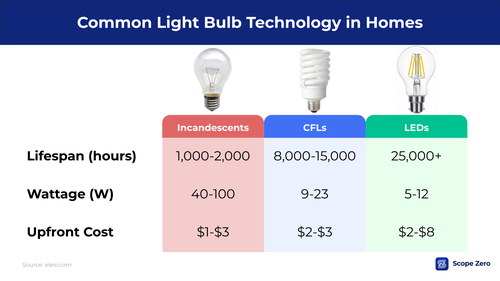
A standard LED typically uses between 5 and 12 watts and can last more than 25,000 hours. A CFL generally uses between 9 and 23 watts and lasts between 8,000 and 15,000 hours. An incandescent bulb may use between 40 and 100 watts while lasting only 1,000 to 2,000 hours.
Although incandescent bulbs often have the lowest upfront purchase price, their high electricity consumption and short lifespan make them the most expensive option over time. While upfront prices can vary, LEDs generally offer the best combination of low energy use and long lifespan.
What Is an LED Bulb?
LED stands for light-emitting diode. LEDs are generally considered the superior household lighting technology because of their low operating costs and long lifespans.
A standard LED bulb typically:
- Uses between 5 and 12 watts
- Lasts more than 25,000 hours
- Costs between $2 and $8 upfront
The upfront cost of an LED may be higher than the cost of some CFL or incandescent bulbs. However, LED prices have continued to fall, and their energy efficiency and long lifespan make them the most cost-effective choice over time.
LEDs can also provide the same level of brightness as bulbs that use considerably more electricity. For example, a 9-watt LED can provide approximately the same brightness as a 60-watt incandescent bulb.
This is possible because watts measure power consumption, not brightness. Brightness is measured in lumens. A lower-wattage LED can therefore produce a similar number of lumens while using less power.
LED adoption has increased rapidly in recent years. In 2024, 37% of homes reported using all LEDs, up from 21% in 2020. Approximately 90% of homes reported having at least some LEDs in use in 2024, compared with 82% in 2020.
What Is a CFL Bulb?
CFL stands for compact fluorescent lamp. CFLs use less energy and last longer than incandescent bulbs, but they generally do not match the energy efficiency or lifespan of LEDs.
A standard CFL typically:
- Uses between 9 and 23 watts
- Lasts between 8,000 and 15,000 hours
- Costs between $2 and $3 upfront
When CFLs were invented, they represented an important improvement over incandescent lighting because they could provide light using considerably less electricity. However, LEDs can offer even lower energy consumption and longer lifespans.
In 2024, approximately 45% of US homes reported having at least a few CFLs in use.
CFLs also contain small amounts of mercury. As a result, they should be handled carefully and properly recycled rather than placed in household trash.
What Is an Incandescent Bulb?
Incandescent bulbs are the oldest and least efficient of the three common household lighting technologies.
A standard incandescent bulb typically:
- Uses between 40 and 100 watts
- Lasts between 1,000 and 2,000 hours
- Costs between $1 and $3 upfront
The low purchase price of an incandescent bulb can make it appear affordable. However, the purchase price is only one part of a bulb’s total cost.
Incandescent bulbs use much more electricity than LEDs and CFLs. They also need to be replaced more frequently. These operating and replacement expenses make them the most expensive option over time.
In 2024, 1 out of every 20 homes still used all incandescent bulbs. Additionally, 51% of homes reported having at least a few incandescent bulbs. This was an improvement from 2020, when 61% of homes still had at least some incandescent lighting.
Which Light Bulb Uses the Least Energy?
LEDs generally use the least electricity of the three common household bulb technologies.
Typical energy use ranges include:
- LED: 5 to 12 watts
- CFL: 9 to 23 watts
- Incandescent: 40 to 100 watts
These wattage differences can create substantial differences in operating costs, particularly for lights that are used for several hours each day. For example, consider a 60-watt incandescent bulb that operates for five hours per day. It consumes 300 watt-hours, or 0.3 kilowatt-hours, of electricity each day.
At an electricity rate of $0.20 per kilowatt-hour, that bulb would cost approximately $0.06 per day or about $22 per year to operate.
Replacing it with a 9-watt LED that performs a similar function would reduce the annual operating cost to just over $3. That represents an approximately 85% decrease in operating costs for one bulb.
The savings can become more significant when multiple frequently used incandescent bulbs are replaced.
For a detailed breakdown of these calculations, read How Much Does Home Lighting Cost, and How Much Can LEDs Save?
Which Type of Light Bulb Lasts the Longest?
LEDs have the longest typical lifespan.
A standard LED can last more than 25,000 hours, compared with 8,000 to 15,000 hours for a CFL and 1,000 to 2,000 hours for an incandescent bulb.
To operate a lighting fixture with one bulb over a 20,000-hour period, a household would typically go through:
- One LED
- Three CFLs
- Approximately 20 incandescent bulbs
The exact number of replacements will depend on the individual bulbs, but this comparison shows why upfront price does not provide a complete picture of lighting costs. An incandescent bulb might cost less during a single shopping trip, but it will consume more electricity and require more frequent replacement. An LED can cost more initially while reducing both operating and replacement expenses over time.
Which Light Bulb Is the Most Cost-Effective?
LEDs are generally the most cost-effective choice over the full life of the bulb.
The total cost of a light bulb includes:
- Its upfront purchase price
- The electricity required to operate it
- The cost of replacement bulbs
- How frequently it must be replaced
Incandescent bulbs can have the lowest initial price, but they use the most electricity and have the shortest lifespans. CFLs offer lower energy use and longer lifespans than incandescent bulbs, but LEDs generally perform better in both categories.
For that reason, comparing bulbs only by shelf price can be misleading. A better comparison considers how much each bulb will cost to purchase, power, and replace over many years.
Should You Replace Every Bulb with an LED?
LEDs are generally recommended for household lighting because of their energy efficiency, low operating costs, and long lifespans.
If you are prioritizing which bulbs to replace first, frequently used incandescent bulbs offer a clear opportunity to reduce energy use. A bulb used for several hours each day has a greater effect on annual electricity consumption than one that is rarely turned on.
Households can begin by identifying:
- Incandescent bulbs used for several hours per day
- Lights that are regularly left on overnight
- Bulbs in frequently occupied rooms
- Bulbs that require frequent replacement
The correct LED replacement should provide the needed brightness while fitting the existing fixture. When shopping, check the bulb’s shape, base type, lumens, and color temperature rather than selecting a replacement based only on wattage.
How Do You Choose an LED Replacement?
When replacing an incandescent or CFL bulb with an LED, consider four main characteristics.
Shape and Base
Check the code printed on the existing bulb or fixture to identify the correct shape and base. For example, A19 is a common household bulb shape, while E26 is the most common base type in the United States.
Brightness
Compare lumens rather than watts. Lumens measure visible light, while watts measure power use.
A standard A19 60-watt incandescent bulb produces approximately 800 lumens. An LED labeled “60-watt equivalent” is designed to provide a similar level of brightness while consuming fewer watts.
Color Temperature
Color temperature is measured in Kelvin.
Light around 2700K appears warm and soft, while light between 4000K and 5000K has a cooler, more daylight-like appearance. Warmer lighting generally works well in bedrooms and living rooms, while cooler lighting may be better suited to kitchens, bathrooms, and workspaces.
Features
If the bulb will be connected to a dimmer switch, confirm that it is labeled as dimmable. Smart bulbs can provide schedules, remote controls, and adjustable color or brightness, but their smart features also require energy.
Frequently Asked Questions
Are LED bulbs better than CFL bulbs?
LEDs generally use less electricity and last longer than CFLs. A standard LED uses approximately 5 to 12 watts and lasts more than 25,000 hours, while a CFL uses approximately 9 to 23 watts and lasts between 8,000 and 15,000 hours.
Are LED bulbs better than incandescent bulbs?
LEDs use substantially less electricity and last much longer than incandescent bulbs. Replacing a 60-watt incandescent used five hours per day with a 9-watt LED performing a similar function can reduce annual operating costs by approximately 85%.
Which bulb is the cheapest to buy?
Incandescent bulbs generally cost between $1 and $3, CFLs cost between $2 and $3, and LEDs cost between $2 and $8. However, LEDs are generally the most cost-effective option over time because they use less electricity and need to be replaced less frequently.
How long do LED bulbs last?
A standard LED bulb can have a lifespan of more than 25,000 hours.
Can CFL bulbs go in the trash?
CFLs contain small amounts of mercury and should be properly recycled rather than thrown in household trash.
Does a higher wattage mean a brighter bulb?
Not necessarily. Wattage measures power consumption, while lumens measure brightness. A 9-watt LED can provide approximately the same brightness as a 60-watt incandescent.
Key Takeaways
- LEDs, CFLs, and incandescent bulbs use different technologies to produce light.
- LEDs generally use the least electricity and last the longest.
- A standard LED uses 5 to 12 watts and can last more than 25,000 hours.
- A standard CFL uses 9 to 23 watts and lasts between 8,000 and 15,000 hours.
- A standard incandescent uses 40 to 100 watts and lasts between 1,000 and 2,000 hours.
- Over a 20,000-hour operating period, a household would typically need one LED, three CFLs, or approximately 20 incandescent bulbs.
- Replacing a frequently used 60-watt incandescent with a 9-watt LED can reduce that bulb’s operating costs by approximately 85%.
- Incandescent bulbs may have a low purchase price, but their energy use and replacement needs make them the most expensive option over time.
- CFLs contain small amounts of mercury and should be properly recycled.
- When selecting a replacement bulb, compare its shape, base, lumens, color temperature, and features, not just its wattage.
This blog focuses specifically on comparing LED, CFL, and incandescent bulbs. For a more comprehensive overview of lighting technology, costs, bulb selection, placement, and energy-saving strategies, read our Complete Guide to Lighting.
Continue Your Sustainability Journey
Want more practical ways to save money and reduce your environmental impact? Sign up for the CSA for Individuals to access additional resources and personalized guidance.
You can also help bring the Carbon Savings Account to your workplace. HR and sustainability leaders can request a demo, while employees can use our ready-to-send email templates to contact their HR or sustainability teams.
Join our community
Sign up for our newsletter to stay up-to-date on all things Scope Zero.


Subscribe to our newsletter



Solutions