Section 4. How home technology influences energy use
The types of home technology you use play a major role in how much energy your home consumes and how much you pay on your utility bills. Not only does the energy source of a device matter, but the type of technology, its age, and its efficiency level all influence energy use. Because home technologies often last many years, understanding these factors can help you make decisions that reduce long-term costs.
Technology age
Older devices tend to use more energy than newer ones. Over time, efficiency can decline as components wear out, seals degrade, or systems fall out of calibration. At the same time, newer models are often designed with improved efficiency due to updated standards and better technology.
For example, a 50-year-old top-freezer refrigerator likely uses significantly more electricity than a brand-new top-freezer refrigerator of the same size. Even if both still function well, advances in insulation, compressors, and controls make newer models far more energy efficient.
Technology type
Age is not the only factor that influences a device’s energy consumption. The type of technology that is used to power the device also matters. Different technologies can deliver the same service while using very different amounts of energy.
For example, a 10-year-old LED light bulb likely still uses less energy than a brand new incandescent light bulb (for the same bulb shape and brightness level). This is because LED technology operates much more efficiently than incandescent technology, regardless of when the device was manufactured.
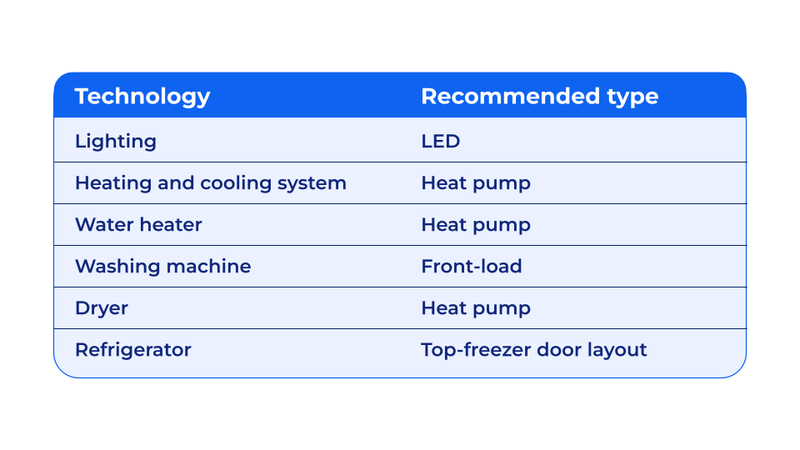
Figure 7 shows a handful of technology types we recommend looking for when shopping for common home technologies.
Efficiency certifications
Lastly, energy efficiency certification labels can provide helpful guidance with finding home technology that minimizes your energy bills. In the United States, ENERGY STAR certified devices tend to use much less energy than similar devices without the certification.
Many appliances also include labels that estimate annual energy use or operating cost. Reading and comparing these labels can help you understand how much a device is likely to cost to run over time, not just how much it costs to buy. Choosing efficient technology can significantly reduce energy bills over the life of the device.