Section 3. Types of home energy utilities
The types of home energy utilities you use significantly influence the total cost of your energy bills. The four most common types of energy sources for homes in the US are electricity, natural gas, propane and fuel oil. These energy sources differ in how they arrive at your home, the units they’re measured in, how much they cost, and how they impact the environment.
Electricity
Almost all homes in the US use electricity, and about 25% of homes are powered exclusively by electricity. All home technology devices have models that can be powered by electricity.
Electricity is measured in kilowatt-hours (kWh).
The cost per kWh varies based on your utility provider, and rates may also depend on the time of day, season, or how much electricity you use within a billing period. The EIA RECS data showed that the average US home consumed 10,848 kWh of electricity in 2020.
In October 2025, the EIA reported that Louisiana had the lowest statewide average residential electricity price of $0.1239 per kWh, and Hawaii had the highest average of $0.3974 per kWh. The average cost per kWh consumed across all US homes was $0.1798. For the average US home that consumes the 2020 average of 10,848 kWh per year, a rate of $0.1798 per kWh would total $1,950 for electricity per year.
Electricity can be generated by energy sources like coal, natural gas, biomass, nuclear power, hydropower, wind, and solar. The environmental impact of electricity consumption depends on which energy source is used to generate the electricity that is consumed. Figure 6 is an eGRID map that shows how the carbon emissions of electricity vary across the US.
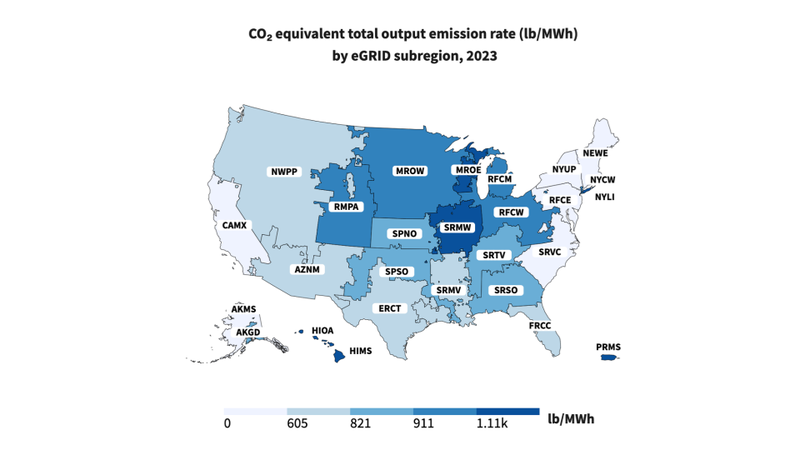
Figure 6. Carbon emissions from electricity across the US
Natural gas
About 60% of homes in the US use natural gas, and about 50% of homes are powered exclusively by electricity and natural gas. Natural gas can be used to generate heat for specified types of space heating systems, water heaters, dryers, stovetops, and ovens.
Natural gas is commonly measured in therms or cubic feet. If it is measured in cubic feet, oftentimes it will be measured in hundred cubic feet (CCF) or thousand cubic feet (MCF). The EIA RECS data showed that the average US home that used natural gas consumed 61 MCF of natural gas in 2020.
The cost of natural gas varies by utility provider and season, and total natural gas bills can also be affected by fixed charges such as connection or service fees.
In October 2025, the EIA reported that Idaho had the lowest statewide average residential natural gas price of $8.11 per MCF, and Hawaii had the highest average of $56.92 per MCF. The average cost per MCF consumed across all US homes in October 2025 was $19.61. For the average US home that consumes the 2020 average of 61 MCF per year, a rate of $19.61 per MCF would total $1,196 for natural gas per year.
Propane
About 10% of homes in the US use propane. Propane can be used to generate heat for specified types of space heating systems, water heaters, dryers, stovetops, and ovens.
Propane is measured in gallons. Propane prices vary by supplier, region, market conditions, and season (often higher in winter). The EIA RECS data showed that the average US home that used propane consumed 396 gallons of propane in 2020.
In December 2025, the EIA reported that the average cost per gallon of propane in the US was $2.52. For the average US home that consumes the 2020 average of 396 gallons of propane per year, a rate of $2.52 per gallon would total $1,116 for propane per year.
Fuel oil
About 6% of homes in the US use fuel oil. Fuel oil can be used to generate heat for specified types of space heating systems and water heaters.
Fuel oil is measured in gallons. Fuel oil prices vary by supplier, region, market conditions, and season (often higher in winter). The EIA RECS data showed that the average US home that used fuel oil consumed 557 gallons of fuel oil in 2020.
In December 2025, the EIA reported that the average cost per gallon of fuel oil in the US was $3.69. For the average US home that consumes the 2020 average of 557 gallons of fuel oil per year, a rate of $3.69 per gallon would total $2,055 for fuel oil per year.