Section 2. Breakdown of home energy costs
The EIA reported that the average US home spent $1,988 on energy bills in 2020. Home energy experts at Scope Zero estimate that the average US home could cut their energy bills by almost 50% by upgrading to energy-efficient home technology. The energy bill savings could be even higher if the occupants of your home have wise energy consumption habits.
But every home is unique in how it consumes energy, so it can be difficult to have a one-size-fits-all playbook for upgrading your home technology. This section will break down how much money the average US home spends to power different home technologies, and it will identify the variables that influence this cost.
The average cost to power home technology in 2020
Figure 3 shows the breakdown of energy bill expenses for the average home in 2020, per the EIA’s Residential Energy Consumption Survey (RECS). RECS datasets include detailed residential energy consumption data across the US at various points throughout the last several decades.
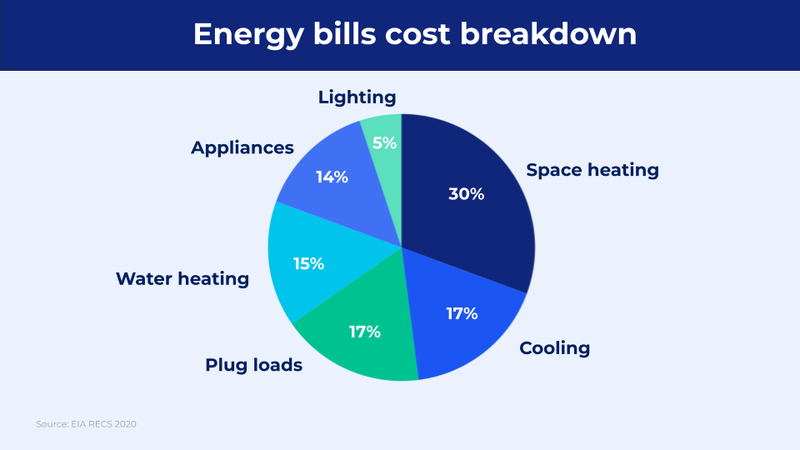
Figure 3. Breakdown of home energy bills in 2020
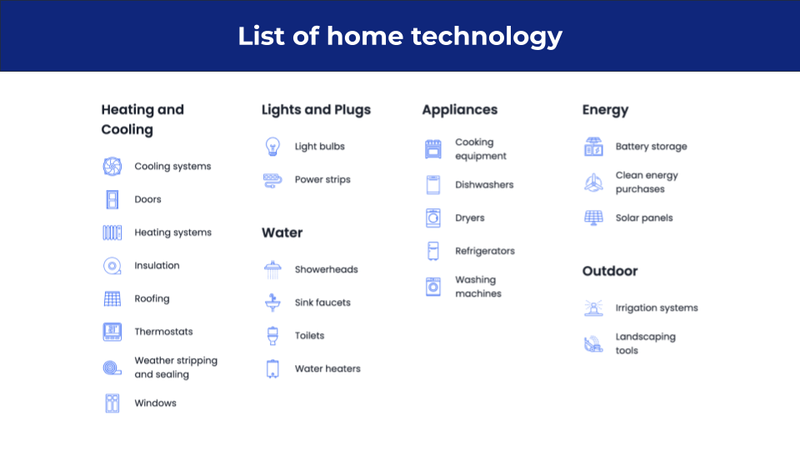
Figure 4. Home technology devices included in categories in Figure 3
As you can see, space heating, space cooling, electronics, and water heating are the four most expensive categories of energy consumption. For a home with this energy profile, it would be wise to focus on home technology upgrades that reduce heating, cooling, and water heating energy consumption. By improving insulation, switching to a heat pump heating/cooling system, and switching to a heat pump water heater, the energy costs of space heating, space cooling, and water heating can be significantly reduced, lowering a large chunk of the overall energy costs. As for electronics, a quick way to reduce this piece of the pie is to unplug devices when they are not being used to prevent “vampire,” or standby, loads.
Many people find it surprising that the appliances category only accounts for 14% of the total annual energy expenses, even though this category includes energy costs to operate your refrigerator, dishwasher, stovetop, oven, washing machine, and dryer combined. Appliances tend to have lower energy costs because all of them except refrigerators are usually used intermittently.
Lastly, it should be noted that Figure 3 shows the average prices reported in 2020. Energy prices can change significantly over short periods of time. Figure 5 shows how the average residential natural gas rates changed between 2020 and 2025.
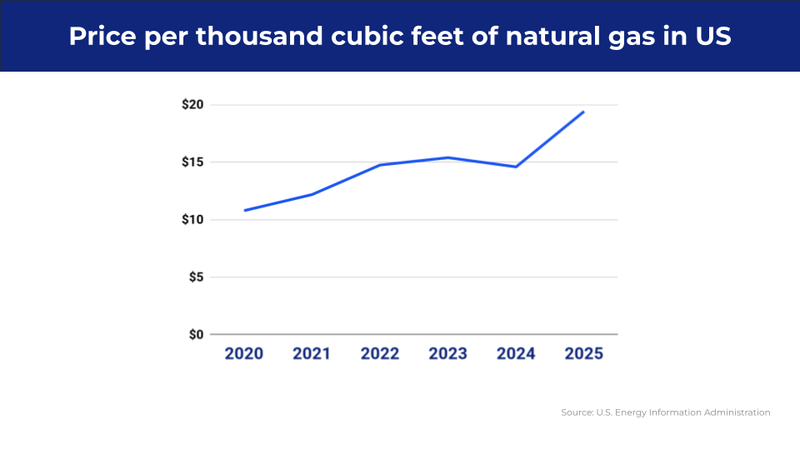
Figure 5. Price per thousand cubic feet of natural gas for US homes between 2020-2025
Variables that influence the cost of home energy use
In addition to changes in energy rates, several other variables heavily influence the total cost of your energy bills. These variables include, but are not limited to, the following:
- What types of utilities you use (electricity, natural gas, propane, etc.)
- What type of home technology you have
- The behavior of the occupants in your home
- The location and climate of your home
- The age, type, and size of your home
For example, space heating likely doesn’t account for 30% of all energy bills for residents in Florida. Similarly, homes with multiple 50-year-old refrigerators might result in a much higher percentage of appliance energy costs than the 14% listed in Figure 3.
The following sections dive deeper into each of the five variables listed above.